Robocop: The Series' Unique 30th Anniversary
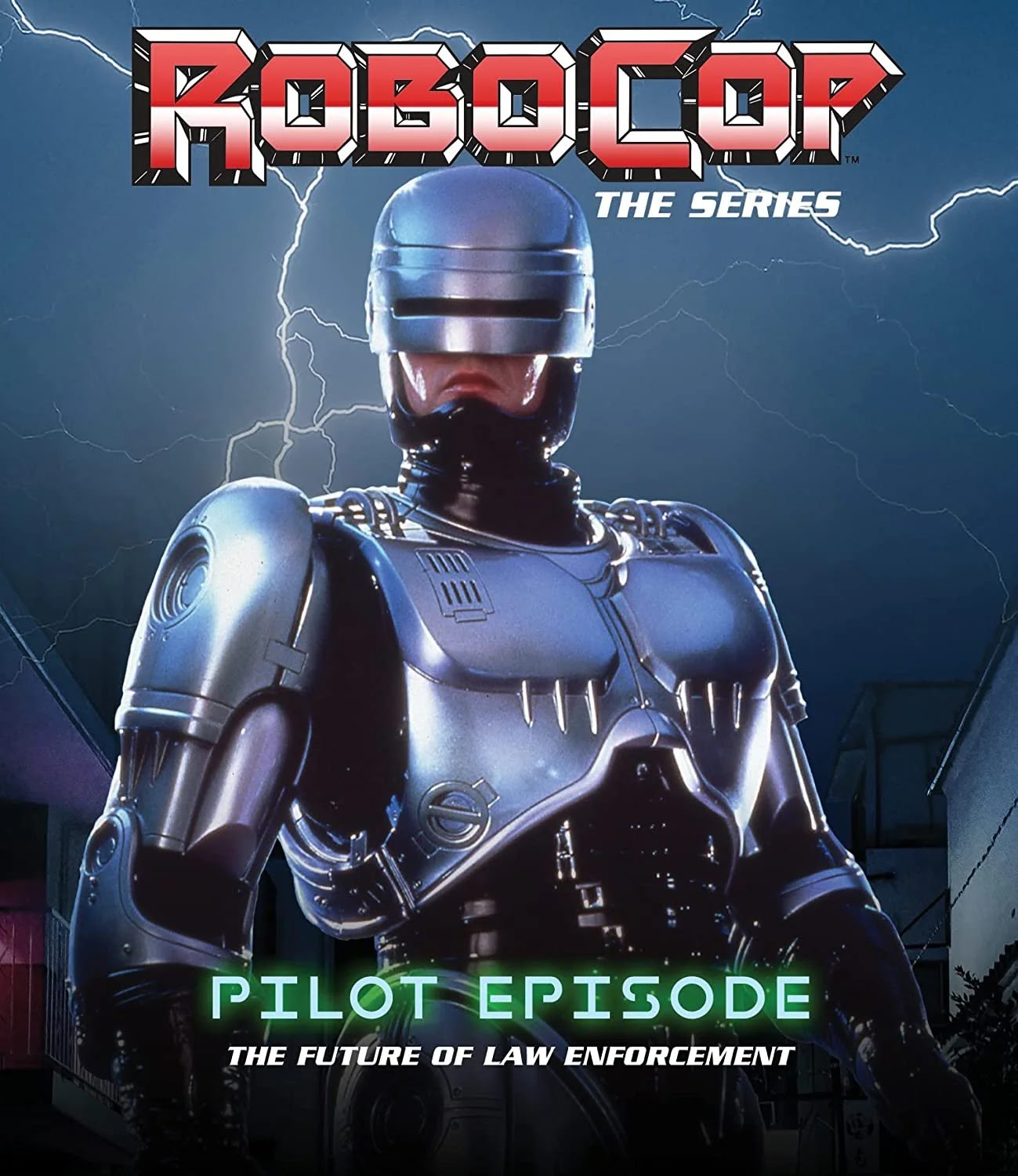
“Robocop”: The Series’ Unique 30th Anniversary
In 1995, Prince Albert II of Monaco was hosting the 63rd annual Festival De Television, a celebration of the best the medium had to offer. That year, guests included director Sydney Lumet, Jerzy Smolimkowski, Tatum O’Neal, Lindsay Wagner and Catherine Zeta-Jones. Upon his arrival, Prince Albert spots Richard Eden, star of “Robocop: The Series”, and immediately makes a beeline for him.
“It was me and the star of ‘Highlander’ [Adrian Paul] - nice guy. And he whispers, ‘Man, do I love your show’,” said Eden. “Then he says, ‘How’s the suit?’ You know, the same questions a fan would ask. He’s waving at Sydney Lumet - ‘I’ll get to you!’ ‘Highlander’ and ‘Robocop’ were two things he particularly wanted.”
Fandom can come in the strangest ways to Eden, most recently on Facebook, where he still sells headshots from the show for a small fee.
“Fans are great,” said Eden. “I’ve never talked to other actors about it, but I just love them, I enjoy them.”
Today, fans father on Facebook to celebrate the 30th anniversary of the show directly with members of the cast and crew, including Eden, executive producers Stephen Downing and Kevin Gillis, Yvette Nipar (Officer Magidan, Robo’s partner on the series), Blu Mankuma (Sargeant Parks), Miles Dale, stuntman Ken Quinn and several others. The group was founded by Marty Grant, a UK-based TV historian.
“Something like this has rarely been done,” said Grant. “A virtual, on-going reunion. It’s not common for fans to interact with the entire cast. They’re all there [sans OCP Chairman David Gardner, who passed away four years ago].”
 |
| An autographed photo from Richard Eden's collection. |
Programming for Kids
Robocop is iconic. Another Facebook group has over 17,000 members, plus untold numbers on Reddit or RobocopArchive. As the mythology establishes, sometime in the near future in the neighbourhood of Old Detroit, a murdered policeman is resurrected as a cyborg by megacorporation Omni Consumer Products (OCP) and programmed only to follow their directives. He’s a cop-computer, a nightmare vision of a futurist technocratic police state to some, the ultimate protector of public safety to others. Since 1987, Paul Verhoeven’s satirical, sci/fi bloodbath has been misunderstood by conservatives, adored by sci-fi nerds and (most) left-leaning critics and universally loved by fans of hard-R, hyperviolent action cinema. Today, nostalgia junkies post (fake) images of old multi-plex marquees proudly displaying it alongside The Lost Boys on social media. To some (mostly male) fans, it represents a better time when endlessly quotable, thoroughly memorable scenes and characters lit up the screen.
“Couldn’t watch it,” said Grant, mirroring the experience of several young fans in the group. “I came to find out about the films through TV Guides and magazines. I did find [a copy] of Robocop 2. It was stark. It was the first time I ever saw blood squibs, actors screaming in pain.”
To those of a certain age in 1993, the PG-13 Robocop 3 at least sent our imaginations wild with a teased image of Robo with a jetpack. The short-lived cartoon series, a toy line from Toy Island, the video game tie-ins and comics all catered to youths. Satirical commercials from the film — with families playing Nuke ‘em! rather than Battleship — also helped set the stage for a more kid-friendly Robocop.

Alas, the third was a massive flop that landed director Fred Dekker in movie jail, and Robo was searching for a new home. After Orion Pictures received a $500,000 cash infusion to license the TV rights by Skyvision Entertainment, a Canadian company, the studio took a hands-off approach. Budgets per episode ran between $1.2 -$1.5. million. Toronto and Mississauga became the new Old Detroit.
A Robocop for the 90s
“We found a wonderful Canadian actor…before we offered him the job, I said, ‘You’re going to be in that suit for maybe seven years,” said executive producer Downing. “I’m not sure a lot of guys thought about that.”
Eden, on the other hand, was ready and willing.
“It was the last day of casting, they’d been casting a long time. I didn’t really know what the suit entailed. We went over the sides, I mumbled some robotic words. Then I started thinking that there was an intensity already starting in me, just because of how I worked. It was really an opportunity to do a television series as a lead. The challenge was, could I handle X amount of time in the suit?
When we went over to Rob Bottin’s, they wanted to check my lips. So they put on the helmet and it was five guys staring at my lips.”
The suit was leftover from Robocop 2, but it left more of the previous actor’s impression than anticipated.
“It was [Peter] Weller’s second suit. He wanted a heavy suit for the second one so he could really feel the robotics, and we had this enormous fibreglass suit that they put me in. I was carrying about 115 lbs. of weight. When Weller stood in that very studio and positioned himself for the moulding, he had put his left foot out and his right foot forward. And they didn’t notice that. They just made the suit that way.”
Working off a rejected sequel script from original writers Ed Neumier and Michael Miner, the pilot began shooting.
Robocop was now in Metro South (Murphy transferred to the West at the start of the film) and partnered with a new, bubble-gum chewing, wise-cracking female partner and a no-nonsense desk Sergeant. Nipar and Mankuma’s performances both pay ample respect to the roles Nancy Allen and Robert Doqui played in theatres, but quickly become their own thing. Diana (Andrea Roth), a murdered scientist-turned-supercomputer, often supported Robo, while Gadget (Sarah Campbell), the station’s adopted mascot, gave children a surrogate.
 |
| Robocop (Eden) with Gadget (Sarah Campbell) |
Robocop 3 may have set a child-friendly template, but how do you tone down a character best known for shooting an attempted rapist in the groin? Start by getting a legendary producer, writer, former ex-LAPD officer, and the guy who insisted MacGuyver couldn’t use a gun. For seven years, MacGuyver only used a gun in the pilot, thanks entirely to Downing and much to the chagrin of the NRA, who staged a boycott. Downing went from an anti-gun hero to a cyborg with one installed in his thigh.
As a result, “I don’t get to shoot anyone in the balls,” said Eden, noting also that it’s his personal favourite Robo moment.
“I was pretty direct - it was a show that would be attractive to a younger audience,“ said Downing. A wide audience, but a younger audience. And I had the same argument as a show doctor on MacGuyver. [Robocop] has all these exacting technical skills. He can avoid using his gun to kill people. Guns were a staple in television. I said, ‘This is a perfect way to show people should try to avoid violence’.”
Less violence meant the opportunity for Robo to have a rogue’s gallery for a post-Batman era, including Pudface Morgan (Wayne Robson), a criminal deformed much like Paul McCrane’s toxic waste face in the film and Dr. Cray Z. Mallardo (Cliff DeYoung), among others. Robocop never directly kills anyone, he’s quicker to shoot the gun out of their hand.
That didn’t mean the satire was entirely stripped. Media Break, the dystopic newscast from the films featuring ads for family board games simulating nuclear war, was still a major feature of the show. There were also other signifiers to win over die-hards. Madigan’s bubble gum and the theme music stayed, along with some new songs by The Eagles’ Joe Walsh (a video with Lita Ford was shot for “A Future To This Life”, but never aired). Though some fans were disappointed that the hard-edged violence and biting social commentary of the first two films were noticeably weaker, the era had also changed.
“We were under [the] Clinton [administration] and we liked that,” said Eden.
The image of Corporate America under Clinton became hegemonic - that meant OCP executives were less pure evil, just buffoonishly greedy and ignorant. It was laughs over commentary, such as when the sexist Chairman (David Gardener) of the corporation is kidnapped by radical feminists and forced to do housework - a suitably 90s joke. There were still streaks of social commentary, like Nuerobrain, a cybernetic AI that runs on the brains of the dead, forcing them to work posthumously.
Still, it was a Robocop that had more in common with the cyborg who once escorted former President Richard Nixon to the National Boy Scouts Association than Verhoeven’s. A Robocop whose computer program doesn’t go for the most violent solution is bound to disappoint some franchise fans, and the lighter tone began to dominate the latter run of the series. The show also ran at 9 p.m., just a little too late for the intended audience.

Fans peruse old collections for treasures.
“The show has been the brunt of too many babies over the decades. Petty, pathetic, easily triggered,” said Grant. “The slightest mention of it, they go off. It’s a TV show, not a policy act.”
Downing even faced criticism from other producers. “He said, ‘You make him look weak.’ I said, I’m sorry you feel that way, I was trying to make him look human’.”
A Future to this Franchise
“Robocop’’s fanbase owes a lot to Skyvision including syndication in the original deal. Robocop would run for years on Syfy in the US and other networks worldwide.
“Sometimes I get recognized out of the suit at like an airport,” said Eden. “I guess those lips became important. I noticed there were all these fan pages for Robocop. So I went to a few. And all of a sudden there was this resurgence. Apparently, it took off. I’ve been signing autographs [to] the Phillipines, to Europe, Australia, the Netherlands. It’s been really impressive for the series.”
As cast and crew continue to join the group, more memories and trivia bits for the show continue to drop for fans, often after a direct question. There’s plenty of fanart and a a fair amount of show-and-tell with retro action figures, playsets, old magazine clippings and more. This is how fans gather now.
Even Eden has been rewatching the season along with fans, commenting after each episode. “After a lot of convincing,” said Grant, “I don’t think he was prepared for how enjoyable they’d be.”
“I found it extremely relaxing,” said Eden. “Instead of needing to watch another heavy show, another Game of Thrones, which is the opposite, whether it would be a sex scene or a horse gets killed.”
The CGI, while dated, is nearly the quality of a major motion picture in 1994. There’s little you won’t see in Brett Leonard’s The Lawnmower Man, an ambitious effects from from two years previous, here.
“[Special effects supervisor] Michael Kavanaugh knew how to blow shit up!” Said Grant. “Why it was short-lived was clear,” said Grant. “It jumped too much from dark to light. When they got it right, there wasn’t a better action or sci-fi show on the air. One that was also political. I don’t think there was a series like it for the whole of the ‘90s.”
For fans, “Robocop” holds a special place in nostalgia and serves as a respite from the modern streaming landscape. Today's shows require heavy investment, and they’re often poorly promoted. If audiences are lucky, the executives won’t cancel it after three seasons for tax purposes, leaving only hashtags for revival on Twitter.
“Robocop”, on the other hand, is free to stream on YouTube and Tubi in North America, and deep investment in lore is hardly required: whether you know the basics of the character or you’re a die-hard fan, it’s a familiar, comfortable universe. The lighter tone may feel like a betrayal of the source material, but it’s otherwise entirely consistent with much of 90s television - an era filled with canned laughter and case-of-the-week drama.
“Was the show a bit cheesy?” wrote Flynn Cook of RobocopArchive. “Most action shows at the time were. If you can look past the silliness…you find that it’s something of a hidden gem. Robocop was about more than violence.”
Of course, there have been significant advancements in Artificial Intelligence. With Silicon Valley continuing to push the notion of a future utopia, some see something closer to Robocop.
“We were already projecting the future,” said Eden. “Ahead of our time. The technology. [David Gardner] was always excited about the future. But the minute we start missing heart, these are not good signs.”
“Where we can, we should avoid blowing up the world with the armory this guy carries around,” said Downing.


Comments
Post a Comment